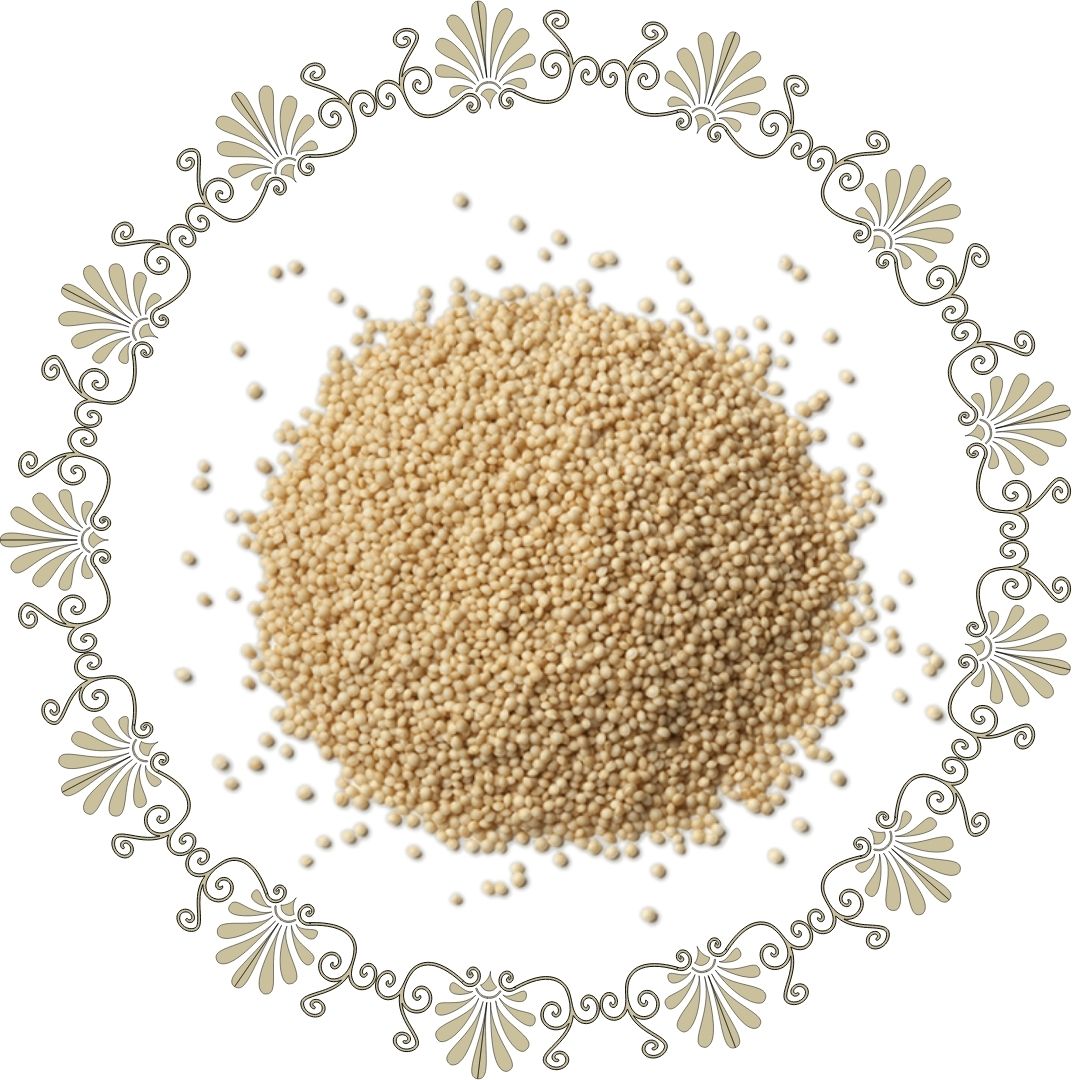
Amaranth1
Amaranth is not a ‘true’ grain, but classified as a ‘pseudo-cereal’, as it’s not part of the Poaceae botanical family. However it is listed with other grains as its nutritional profile and uses are similar to ‘true’ cereal grains. Thanks to the lively, peppery taste of amaranth and the higher level of protein it contains compared to most other grains, amaranth is today rising in popularity. Amaranth is not grown in large quantities in Australia so most amaranth is imported.
Benefits of Amaranth1
- High protein content (13-14%) and a carrier of lysine, an amino acid that’s missing or negligible in many other grains.
- Consists of 6 to 9% of oil which is higher than most other cereals. Amaranth oil contains approximately 77% unsaturated fatty acids and is high in linoleic acid.
- High in dietary fibre.
- Gluten free.
- High in iron, magnesium, phosphorus, potassium and appreciable amounts of calcium.
- A rich dietary source of phytosterols, with cholesterol-lowering properties.