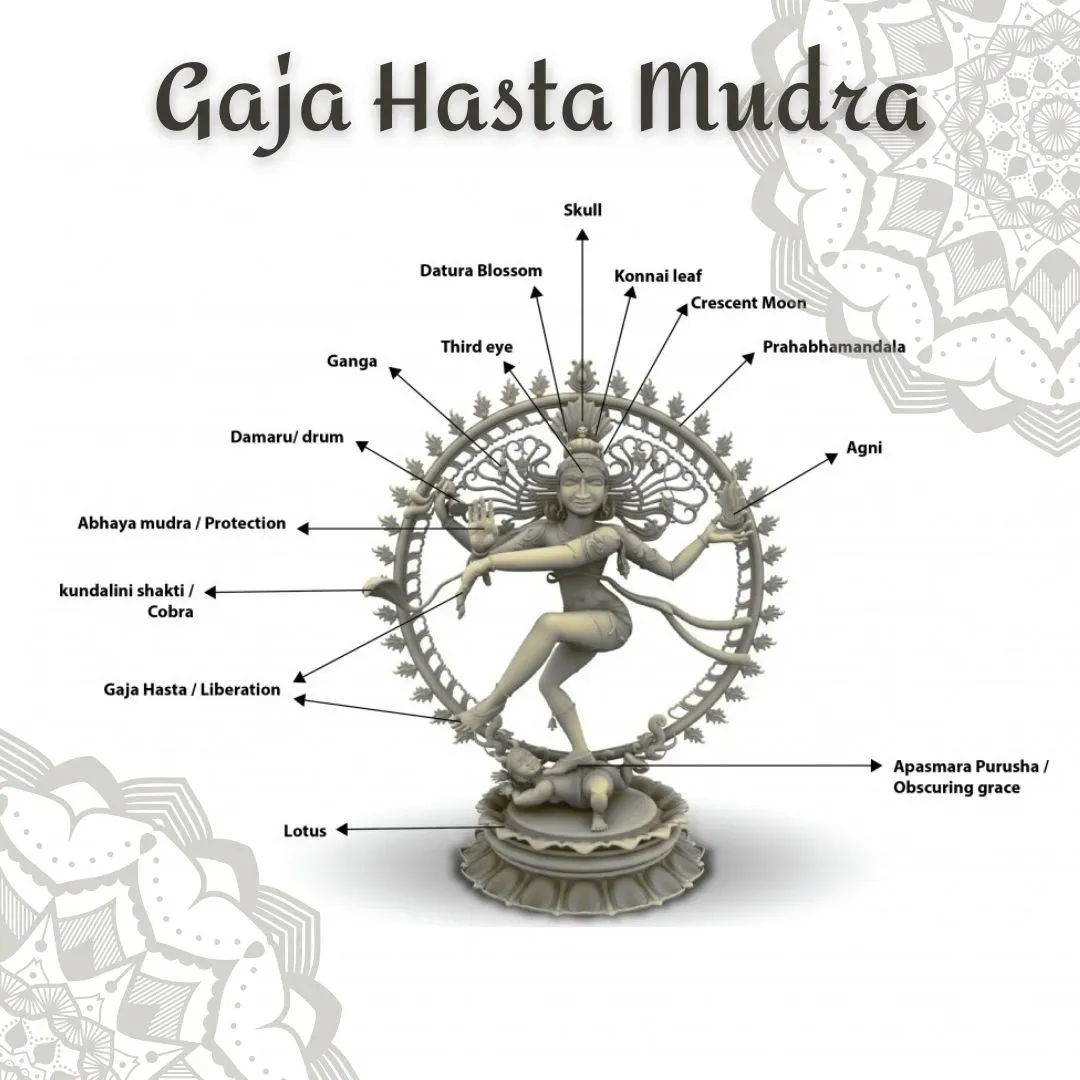
Gaja Hasta Mudra
Gaja hasta mudra is a hand position that represents the elephant trunk of the Hindu god, Ganesha, who is the remover of obstacles and the son of Shiva. The term comes from the Sanskrit, gaja, which means “elephant”; hasta, meaning “hand”; and mudra, which translates as “mark,” “closure” or “seal.” Hasta mudras are used in conjunction with yoga asanas and are key symbolic elements in traditional Indian dance.
This mudra is most commonly found in depictions of Nataraja, lord of the dance and an avatar of Shiva. In gaja hasta mudra, his lower left hand points toward his upraised foot.
Benefits
- Stretches spine.
- Improves balance.
- Tones leg muscles.
- Opens chest.