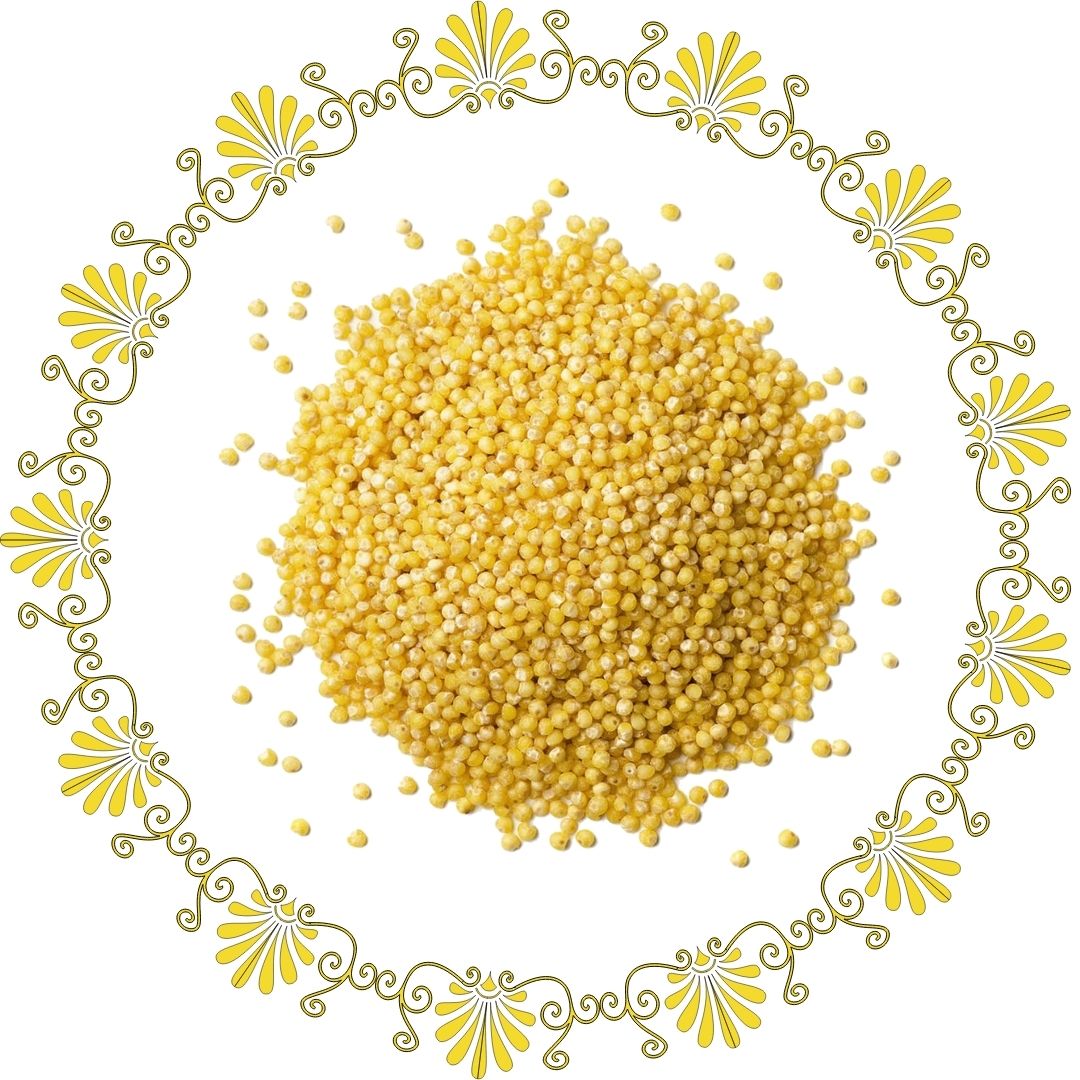
Millet
Before rice was widely consumed in Asia, it is thought that different varieties of millet were the staple grain in this region. For centuries it remained the leading grain. It is one of the hardiest grains and is therefore a staple food in regions with poor soils where other grains will not grow at all (e.g. parts of India, Africa, China and Russia). This legacy persists in the Chinese language, where the signs for ‘millet’ and ‘mouth’ together make the word ‘harmony’. It is a gluten free grain that in most cases is used as a whole grain.
Benefits of Millet
- Low in fat (which is mostly unsaturated) and high in carbohydrate (mainly starch).
- A good source of dietary fibre.
- High in potassium and low in sodium.
- Gluten free.
- Contains B-group vitamins such as thiamin, riboflavin, niacin, vitamin B6 (pyridoxine), folate and pantothenic acid
- Contains vitamin E.
- Contains iron, zinc, magnesium, phosphorus and selenium (depending on the soil content of selenium).
- Contains small amounts of copper, manganese and calcium.
- Contains phytochemicals including lignans, phenolic acids, phytic acid, plant sterols and saponins.